
Saturday, September 6, 2025
Music of Peru and the Andes Comes to Silver City Friday September 12
Silver City, Nevada - Kantu Inka brings the folkloric music of the Andes to Silver City this month in a free, public concert. Carlos Ocampo, a musician and composer for over two decades in the Cusco region of Peru, and Julie Lozada Ocampo, who also plays traditional Andean instruments, perform together as Kantu Inka.
ABOUT KANTU INKA CONCERTS: Along with beautiful music, the concerts include tidbits about traditional Andean instruments and the history of songs, as well as commentary in Quechua and Spanish. Carlos says “la música no tiene fronteras y hermana a los pueblos del mundo" (music has no borders and brings people of the world together).
Since 2003, Kantu Inka has been teaching culture through music with an emphasis on the Andes and Perú.
They have shared their music with thousands of students in K-12 schools, and at universities, libraries and dozens of other venues throughout Nevada, California and Colorado. Among many other shows this year, Kantu Inka performed at McKinley Arts and Culture Center for Reno’s annual Artown festival, and they opened Carson City’s annual Jazz & Beyond Music Festival at the Governor’s Mansion. This year they also taught and performed at many venues across Northern Nevada as part of the Pioneer Center Youth Program and the Golden Encore Program.
Director for the Resident Artist Program in Silver City, Quest Lakes, notes that “Julie and Carlos are generously donating their performance as a gift to the community, and contributing any donations at the door to the Resident Artist Program and the Silver City Preservation Society.”
WHEN AND WHERE: Kantu Inka performs at the Silver City Schoolhouse at 385 High Street, Silver City, Nevada 89428 on Friday, September 12, 2025 at 6pm. Silver City is located three miles south of Virginia City, and is part of the Comstock region National Historic Landmark District. No tickets are required for the concert. Kantu Inka will give any donations collected at the door to two local groups.
Julie Lozada Ocampo of Kantu Inka explains that "this presentation is dedicated to supporting two vital organizations in Silver City: the Resident Artist Program and the Silver City Preservation Society. Both work tirelessly to preserve and enrich the community. In recognition of their invaluable contributions, Kantu Inka is honored to donate an Andean folkloric music performance. We are deeply grateful to these institutions for their continued support of our work. Through their efforts, we have been able to share public folk music concerts with the community...We hold great admiration for the spirit of Silver City and feel truly blessed to be part of its cultural life.”
For more about Kantu Inka, see their website at http://kantuinka.com.
To reserve a seat at the concert, email Quest Lakes at 847-0742.


Thursday, January 30, 2025
Farewell to Rhonda
Rhonda Kay Powell was born on July 16, 1960. She grew up in Liberty, Indiana, and lived in the small community for most of her life. After high school, she worked at Goodwill Industries in Cincinnati, Ohio and Muncie, Indiana. Later, she worked in Noblesville, Indiana for Third Phase.


She adored her nieces and nephews and great-nieces and great-nephews and was always glad to see them. She had ocean-side summer vacations at Hatteras Island with her her nieces Kerry and Jessica and their families, and her sister Bernice. She attended her niece Quest’s wedding in Nevada and went sightseeing around Lake Tahoe, Reno and Virginia City. Her nephew Dan was not only a relative, but also a friend. They always enjoyed one another’s company.
Up until her late 40s, when arthritis began to make it difficult to write, Rhonda was a frequent letter writer. Her love for her family, and her devotion to God, were always evident in her heartfelt letters.
 |
| Letter from Rhonda, 2001 |
She memorized the phone numbers of dozens of family members and friends, and would leave frequent messages, referring to herself by her nickname, R-Pooh. Her phone messages often included her favorite sayings such as “are you up and bright-eyed and bushy-tailed?”
Rhonda loved nothing more than making people laugh. Even in her last days she found ways to make others laugh with funny comments about her favorite TV shows like Dallas and Days of Our Lives and General Hospital.
Rhonda passed away while in hospice comfort care at Reid Hospital on Jan. 29, 2025. In the days before, her sisters Connie and Bernice were with her, playing her favorite gospel tunes and Elvis songs, and many of her loved ones visited and called.
We already miss R-Pooh.

Thursday, July 18, 2024
Hold Tender This Land
By Quest Lakes, July 18, 2024
The photo below shows my grandparents in Kentucky with my mother and my uncle, around 1949. My mom was born in her Grandma Delia's home in Rockcastle County in eastern Kentucky. Our Lakes relatives have lived in the Appalachian region since the late 1700s. Many summers during my childhood, my parents and grandparents took me to Sandgap, Kentucky to spend time with my great grandparents on the Lakes side of the family. They had a small subsistence farm and also grew tobacco to make ends meet. They welcomed us with big suppers of homemade biscuits, fried ‘taters and gravy and cobbler made with blackberries they picked on their own land. Nevertheless, I do not claim to be “a daughter of Appalachia.” JD Vance, who grew up in a working class family in Middletown, Ohio rather than Appalachia, implies he's a son of Appalachia because his grandparents grew up in Kentucky.

In a 2020 essay, Kentucky native Piper Hansen writes that Vance’s memoir “Hillybilly Elegy” is a “sociological construction of what Vance thinks Appalachia is...Vance's writing shows that he may have a seriously narrow view of not just Appalachia but the world...His memoir bashes the entire region with shocking ease and gives a false impression of what the people of Appalachia are really like.”
It’s worth noting that the term "hillbilly" developed as a way for coal companies to eliminate empathy for the Appalachian people as they destroyed the region's beautiful mountains, forests and streams. The insult was first used in the early 1900s, around the time coal industries began to appear in Appalachian communities. The hillbilly caricature solidified during the Great Depression.
In her essay for The Guardian this week, Neema Avashia, “the child of Indian immigrants who settled in Appalachia in the 1970s”, writes that “folks outside Appalachia devoured Hillbilly Elegy because it reinforced what they already believed about us: that we were lazy, homogenous, and to blame for the unemployment, addiction and environmental disasters that plagued us. Vance’s description of a Jackson, Kentucky, where ‘people are hardworking, except of course for the many food stamp recipients who show little interest in honest work’, allowed liberals and conservatives alike to write Appalachia off as beyond saving, and its problems as self-created, and thus, deserved.” Avashia concludes that “a person who truly represented Appalachian people wouldn’t take money from the same big pharma lobby that left West Virginia with the highest opioid overdose rate in the country. They wouldn’t deny climate change in the face of catastrophic flooding that eastern Kentucky still hasn’t recovered from two years out. They wouldn’t stoke fear of immigrants, who provide essential labor in Appalachia in healthcare, agriculture and service industries. They wouldn’t sow division through culture wars in a region where solidarity is desperately needed.”
The photo below shows my relatives Polly and Tom Milt Lakes, who lived in what Barbara Kingsolver describes as a "deep hollow above the creek." Polly was a school teacher and postmaster in Jackson County, Kentucky who is remembered for having helped deliver many babies in the area. Barbara Kingsolver wrote, with tenderness and insight, about the Lakes family land near Horse Lick Creek in her book High Tide in Tucson. Kingsolver's description of the area perfectly captures the place I remember visiting on family trips as a child: " The forest is unearthly: filtered light through maple leaves gives a green glow to the creek below us. Mayapples grow in bright assemblies like crowds of rain-slick umbrellas; red trilliums and wild ginger nod from the moss-carpeted banks."
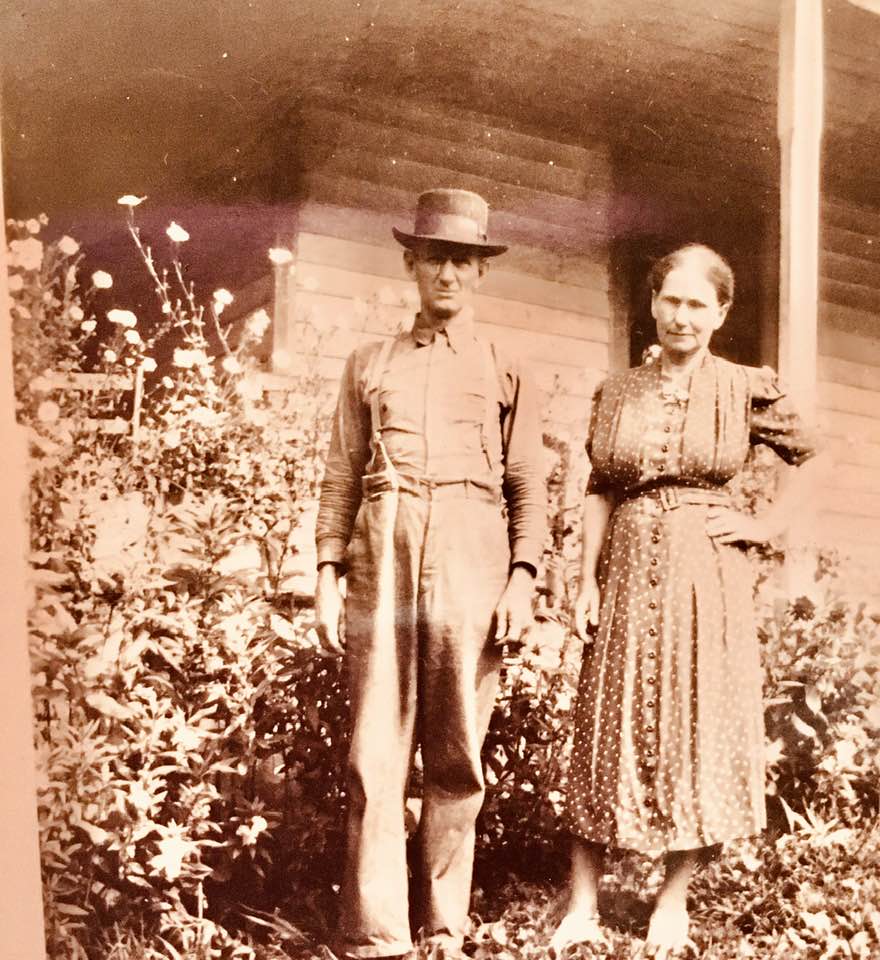
If you want to learn more about Appalachia, try bell hooks 2012 book Appalachian Elegy, or Appalachian Reckoning: A Region Responds to Hilbilly Elegy, edited by Anthony Harkins and Meredith McCarroll. For more about the Lakes family’s “homeplace” in Kentucky, see Kingsolver’s book High Tide in Tucson, pg 175: https://pacificnorthwestwriting.wordpress.com/wp-content/uploads/2018/05/kingsolver_high_tide_in_tucson.pdf
The title used here, "Hold Tender This Land," refers to a poem from bell hooks 2012 book Appalachian Elegy.
Thursday, November 30, 2023
Holiday events December 2023
A list of some of our favorite things in our region this December:
Christmas Tree Sales that Benefit Area Programs: Community Roots, a nonrofit garden center in Dayton, carries a large selection of fresh cut and live fir trees. And Community Roots’ gift shop is stocked with unique items such as local crafts and honey to fill your gift-giving needs. Proceeds benefit community programs such as food pantries. Location: 209 Dayton Valley Road. Hours: Monday through Saturday 10 am – 7pm and Sundays from 11 am - 6 pm. Phone: 350-9250.
Jolabokaflod: Get ready for the Jolabokaflod (“Christmas book flood”), a tradition of exchanging books as gifts on Christmas Eve and spending the night reading and drinking hot chocolate. There are free books for all ages on bookshelves inside the local post office and in the Little Free Library box outside the post office Silver City.
Friday, December 1: Carson City's 35th Silver and Snowflakes Festival of Lights. Tree lighting on the capitol grounds includes carols by children’s choirs and the appearance of Santa and the Grinch (and photo ops) and free carriage rides. The children begin the program with singing at 5:30 pm. The Tree Lighting Ceremony, with remarks by the Governor and the Mayor, is from 5:30pm-6:15pm. Other groups will be caroling at McFadden Plaza Stage (across from Legislative grounds).
Saturday December 2: Silver City's annual Holiday Fair is 10am-5pm at the Silver City Schoolhouse. Live music, beverages, local, handmade treasures.
Saturday December 2 and 3: St. Mary’s Art Center Holiday Faire from 10am-4pm, Virginia City. The Faire continues on Sunday, Dec. 3 from 10am-3pm.
Saturday December 2 and 3: Senior Center Craft Fair from 10am-5pm, Virginia City. The Craft Fair continues on Sunday, Dec. 3 from 10am-3pm.
Sunday, December 10 Holiday Treat Concert: The Carson City Symphony will be joined by the Carson Chamber Singers and the Victorian Dancers. Showtime is at 4 p.m. at the Carson City Community Center, 851 E. William Street. Blood donors at Vitalant's Carson City Donor Center from Dec. 2 through Dec. 9 may receive a complimentary ticket to the concert. For tickets and more information, see CCSymphony.com or call 883-4154.
Saturday, December 16 Silver City Christmas Party: Hosted by the Silver City Volunteer Fire Department, which will provide ham, turkey and beverages. Bring your favorite side dish or dessert. There will be a special appearance by Santa Claus, who will bring gifts for children on his list (add your child’s name to the sign up sheet at the post office). Event will be at the Schoolhouse.
Through December 21 at Western Nevada College’s Bristlecone Gallery: CCAI's exhibition, "It Started with Willows" can be seen during gallery hours Mon-Fri 8am-7pm. The Carson City show presents contemporary paintings, drawings, prints, and sculptures from the Great Basin Native Artists collective and historic working Native baskets from the Lloyd Chichester Collection.

Thursday, November 9, 2023
Arts News and Notes Fall 2023 Silver City Nevada
Call for Artists for the Holiday Fair in Silver City: Show and sell your art and crafts at the Silver City Schoolhouse during the annual holiday event, December 2, 2023. Email evangeline@evangelinepresents.com for details.
New Edition of Neon Nevada by Former Silver City Folks: On November 9, 2023 from 6pm-8pm at the Nevada Museum of Art, Sheila Swan and Peter Laufer, authors of Neon Nevada, will discuss the influence of neon signage on Nevada’s unique culture. Stay for a book signing of their expanded 2023 edition after the talk. Peter Laufer and Sheila Swan began documenting the state's neon decades ago when they were living in Silver City. About Neon Nevada: First published in 1994, Sheila Swan and Peter Laufer take readers on a journey across the state on a quest to discover Nevada’s neon. Full-color photographs and historical commentary bring the state’s hues of neon to life through the year 2022 in the newly updated and expanded edition. The updated edition of the book was released on Oct. 24, 2023.
Rick Shea and Tony Gilkyson play the Silver City Schoolhouse on Sunday, Nov. 19 at 7PM! Rick Shea and Tony Gilkyson, seasoned guitarists and songwriters with well known resumes (Shea with Wanda Jackson, R.E.M and others, Gilkyson with Tom Waits and Bob Dylan) team up. $15-$25 donation at the door. RSVP: evangeline@evangelinepresents.com This is a benefit for the Silver City Preservation Society. "Gilkyson is a fine guitarist and an equally fine songwriter with an eye for the ironic and darkly humorous." - Los Angeles Times "Shea is.. a hauntingly nostalgic vocalist, imperative guitarist and literate, detail rich songwriter, do yourself a favor" - Sing Out Magazine. The event is at the Silver City Schoolhouse (community center) at 385 High Street, Silver City, NV 89428.
SMAC Fall Exhibition: St. Mary’s Art Center’s fall exhibition includes art by Scott MacLeod, a former artist-in-residence in Silver City, plus art by Honey Coughlin, Shaun Griffin, Edw Martinez, Fredric Hobbs, and many others. The exhibition is on view until Nov. 26, 2023. See SMAC’s website for hours.
Annual Holiday Fair December 2: Join Silver City for its festive holiday celebration and shopping event on Saturday, Dec. 2, 2023 from 10am-5pm. Handmade fine art, pottery, beadwork, metal work, jewelry, photography, textiles and more from local artists!
Enjoy mimosas, hot cocoa, music and a festive atmosphere while you peruse the wonderful offerings. There will also be an art raffle and a bake sale with delicious baked goods from Comstock bakers. Proceeds benefit the Silver City Preservation Society, a 501c3 nonprofit. The event is at the Silver City Schoolhouse (community center) at 385 High Street, Silver City, NV 89428.
Silver City Displays: At the U.S. Post Office in Silver City you'll find a changing display inside of the large glass cabinet on the south wall. Past exhibits have featured the local community garden and gardeners, musicians of Silver City, publications by Silver City locals, artifacts saved from the fire that destroyed the original Schoolhouse in 2004, and many more.
Silver City Reads: Borrow books at the Silver City Volunteer Library (located inside the Silver City Schoolhouse), which is now open on Saturdays from 2:30pm-5pm. You can also take and keep (or exchange) books that you find at the Silver City Little Free Library (located outside the post office) and the bookshelves inside the post office.
Alice Cazenave of London, UK, who was an artist-in-residence in Silver City Oct-Dec. 2022, writes, "As part of my PhD fieldwork, I've been tracing the mobilisation of silver used in analogue photographic industries. This time last year I spent two months living in [Silver City, Nevada.] Across only two decades around the 1870s, these sites extracted nearly 7 million tonnes of silver. The toxic legacy of that extraction is extreme and the site is now a U.S National Priorities Superfund site...Whole mountain sides were honeycombed by corporations searching for silver...My time there was spent making photo-chemistry out of the plants that help restabilise the ground. I also spent time with some of the communities living there today, as well as mining corporations that were active in the region. Every evening I went up to Tommy's to look at the view of the Sierra Nevada. He built his house on a pile of mining tailings. He drank beer and I drank tea and those moments were simple and special. I'm so grateful for those I've met along my journeys following silver." Earlier this year Alice presented some of her research at the Photographic Histories Research Centre, De Montfort University during a conference titled "Photography in Its Environment." She has exhibited some of the work she created during her artist residency in Silver City at exhibitions, including one in Silver City, Nevada ("Desert Treasure") as well as in Birmingham, England ("Beyond Silver"). Alice's website is https://www.alice.cazenave.co.uk/
SILVER PALOOZA: The annual Silver Palooza Music and Art Festival in Silver City is scheduled for July 2024 at the Silver City Park, Schoolhouse and stage.


Tuesday, July 14, 2020
Resident Artist Program in Silver City Welcomes Kerry Rossow
Silver City, Nevada - The Resident Artist Program in Silver City is delighted to announce our summer visiting artist, Kerry Rossow, an Illinois-based author, performer, and co-founder of the She Said Project. 
Rossow will create photo essays of Silver City’s historic Comstock community and high desert landscape during her residency. Her writing has been published in three anthologies - two have made the New York Times best-sellers list.
Her photographs and nonfiction gained national attention before she co-founded the She Said Project. The Project includes “That’s What She Said” shows, which serve as a platform for everyday women to share their extraordinary stories on stage. The She Said Project also includes a podcast, co-hosted by Rossow and Project Director, Jenette Jurczyk, as well as That’s What Teens Say, an empowerment program with teen girls. Listen to Rossow's inspirational story about how the She Said Project got started in this podcast: https://podcasts.apple.com/gb/podcast/the-she-said-project-my-sister-in-stories/id1416361738?i=1000465579093

Rossow has also taken her own life stories to the stage as part of the cast in the national series of live readings called "Listen to Your Mother", as well as in sold out performances of "That's What She Said" at the Krannert Center for the Performing Arts at the University of Illinois Urbana-Champaign and at the Virginia Theater in Champaign, Illinois.
 About the Resident Artist Program: People creating in the performing, visual, or literary arts apply to reside at McCormick House in Silver City for periods of up to 3 months in exchange for offering performances, exhibitions, workshops, artwork, etc. to benefit Silver City and the Northern Nevada region. One of the goals of the program is to introduce new voices to the community and programs that engage people in becoming lifelong arts and culture participants or creators. Previous visiting artists include Pulitzer Prize nominated poet David Lee, internationally known photographer Frances Melhop, award winning poet Gary Short of Guatemala, and many artists such as Sophie Scott of New Zealand and Stewart Easton of London. For more information, contact Program director Quest Lakes at (775) 847-0742.


Rossow will create photo essays of Silver City’s historic Comstock community and high desert landscape during her residency. Her writing has been published in three anthologies - two have made the New York Times best-sellers list.

Her photographs and nonfiction gained national attention before she co-founded the She Said Project. The Project includes “That’s What She Said” shows, which serve as a platform for everyday women to share their extraordinary stories on stage. The She Said Project also includes a podcast, co-hosted by Rossow and Project Director, Jenette Jurczyk, as well as That’s What Teens Say, an empowerment program with teen girls. Listen to Rossow's inspirational story about how the She Said Project got started in this podcast: https://podcasts.apple.com/gb/podcast/the-she-said-project-my-sister-in-stories/id1416361738?i=1000465579093

Rossow has also taken her own life stories to the stage as part of the cast in the national series of live readings called "Listen to Your Mother", as well as in sold out performances of "That's What She Said" at the Krannert Center for the Performing Arts at the University of Illinois Urbana-Champaign and at the Virginia Theater in Champaign, Illinois.


Friday, May 29, 2020
My last opinion column for MVN and RGJ
If you cannot be brave, be kind
by Quest Lakes, May 29, 2020
When I was about ten years old, my dad gave me his copy of The Diary of Anne Frank and recommended that I read it. For decades after reading it, I wondered about the people who stayed quiet and were complicit in their silence as fascism took over.
Naomi Shulman wrote that “nice people made the best Nazis. My mom grew up next to them. They got along, refused to make waves, looked the other way when things got ugly and focused on happier things than ‘politics.’ They were lovely people who turned their heads as their neighbors were dragged away.”
My purpose in writing these weekly columns over the last few years has been, in part, a response to a question I posed to myself as a child. If something like that happened here, what would I choose to do?
My answer to myself? Exercise the freedom outlined in this nation’s First Amendment and write columns that remind people of the steps Hitler and Stalin took to consolidate power. Authoritarians often use similar strategies, a “playbook” if you will.
One of Hitler’s most quoted passages from Mein Kampf stated that “what we must fight for is to safeguard the existence and reproduction of our race and our people, the sustenance of our children and the purity of our blood...” In a nod to those words, in 2017 white nationalists descended upon Charlottesville, Virginia where cell phone video captured them carrying torches and chanting things like “Jews will not replace us.” Several of my columns pointed out the rise and growing coordination of white nationalists groups calling for a white ethnostate, and detailed the violence that goal would entail in our pluralistic society.
Other of my columns noted that President Trump has labeled our free press “fake news” and journalists as “liars,” a tactic familiar in Germany when Hitler declared the free press Lügenpresse (lying press). I’ve written about Trump’s Attorney General Bill Barr and Secretary of State Mike Pompeo and their push to create an entanglement of religion and government.
When I wrote about Gleichschaltung, the Nazi word for establishing a synchronized system of totalitarian control over all aspects of society, or the “Nazification of state and society,” I got in hot water with local Trump supporters. The goals of Gleichschaltung included paying homage to der Fuhrer (the Leader), removing all foreigners (which meant most everyone except those of the “Aryan” race), intimidating or murdering anyone who opposed Nazi ideas (such as communists and members of trade unions), and brainwashing the populace to believe that sacrifice for der Fuhrer and the state was both welcome and desirable. Under Joseph Goebbels, the Nazis’ "Ministry of Public Enlightenment and Propaganda” gained complete control of communications - newspapers, radio, television, movies, books, as well as music, theater, and art. In this way, Germany became saturated with Nazi ideology and full coordination – or Gleichschaltung - was achieved. In addition, purging the civil service was central to Gleichschaltung.
My column on the Reichstag Fire Decree – similar to declaration of National Emergency – explained how the Decree was ultimately used to establish a one-party Nazi state in Germany, and hinted about the ways authoritarians use chaos to consolidate power. This week, in the midst of a pandemic, President Trump retweeted a video of a speech by Couy Griffin, head of Cowboys for Trump, that begins with Griffin declaring, “the only good Democrat is a dead Democrat.”
One of my columns defined terms like stochastic terrorism, which is the “use of mass public communication to demonize a particular individual or group, which incites or inspires acts of terrorism.”
The Sturmabteilung (SA) or Brownshirts, were the focus of one of my columns. The Brownshirts became the main paramilitary wing of the Nazi party and were essential to the rise of Nazi power. Hitler encouraged the Brownshirts to go after Germany’s leftist and Jewish populations for intimidation. They were also the bullies in brown uniforms posing as “security” at Nazi rallies and meetings. Far from being a small fringe group, the Brownshirts included millions of working class and middle class professionals and ex-military. As such, they successfully popularized the Nazi worldview of political violence, and the patriotic duty to fight “Judeo-Bolshevism.”
In one of my latest columns, I wrote about the infiltration of accelerationist and white supremacist paramilitary groups into the “ReOpen” protests across the country, including in Carson City and Las Vegas. Yale history professor Timothy Snyder has warned, “when the men with guns who have always claimed to be against the system start wearing uniforms and marching with torches and pictures of a leader, the end is nigh. When the pro-leader paramilitary and the official police and military intermingle, the end has come."
Referring to unrest in Minnesota, last night President Trump moved this country into a new stage when he tweeted, “Just spoke to Governor Tim Walz and told him that the Military is with him all the way. Any difficulty and we will assume control but, when the looting starts, the shooting starts.” His use of the phrase, “when the looting starts, the shooting starts,” was a purposeful reference to bigoted Miami, Florida police Chief Walter Headley, known in the 1960s for his mistreatment of the black community and his use of that exact phrase. Segregationist George Wallace also used the phrase during his 1968 presidential campaign.
This is my last column for the Mason Valley News. The country has moved to a new stage that requires more than columns. In November of 2016, Sarah Kendzior, an expert on authoritarian regimes, wrote something that is important to remember in the coming months: “My heart breaks for the United States of America. It breaks for those who think they are my enemies as much as it does for my friends. You still have your freedom, so use it. There are many groups organizing for both resistance and subsistence, but we are heading into dark times, and you need to be your own light. Do not accept brutality and cruelty as normal even if it is sanctioned. Protect the vulnerable and encourage the afraid. If you are brave, stand up for others. If you cannot be brave – and it is often hard to be brave – be kind.”

by Quest Lakes, May 29, 2020
When I was about ten years old, my dad gave me his copy of The Diary of Anne Frank and recommended that I read it. For decades after reading it, I wondered about the people who stayed quiet and were complicit in their silence as fascism took over.
Naomi Shulman wrote that “nice people made the best Nazis. My mom grew up next to them. They got along, refused to make waves, looked the other way when things got ugly and focused on happier things than ‘politics.’ They were lovely people who turned their heads as their neighbors were dragged away.”
My purpose in writing these weekly columns over the last few years has been, in part, a response to a question I posed to myself as a child. If something like that happened here, what would I choose to do?
My answer to myself? Exercise the freedom outlined in this nation’s First Amendment and write columns that remind people of the steps Hitler and Stalin took to consolidate power. Authoritarians often use similar strategies, a “playbook” if you will.
One of Hitler’s most quoted passages from Mein Kampf stated that “what we must fight for is to safeguard the existence and reproduction of our race and our people, the sustenance of our children and the purity of our blood...” In a nod to those words, in 2017 white nationalists descended upon Charlottesville, Virginia where cell phone video captured them carrying torches and chanting things like “Jews will not replace us.” Several of my columns pointed out the rise and growing coordination of white nationalists groups calling for a white ethnostate, and detailed the violence that goal would entail in our pluralistic society.
Other of my columns noted that President Trump has labeled our free press “fake news” and journalists as “liars,” a tactic familiar in Germany when Hitler declared the free press Lügenpresse (lying press). I’ve written about Trump’s Attorney General Bill Barr and Secretary of State Mike Pompeo and their push to create an entanglement of religion and government.
When I wrote about Gleichschaltung, the Nazi word for establishing a synchronized system of totalitarian control over all aspects of society, or the “Nazification of state and society,” I got in hot water with local Trump supporters. The goals of Gleichschaltung included paying homage to der Fuhrer (the Leader), removing all foreigners (which meant most everyone except those of the “Aryan” race), intimidating or murdering anyone who opposed Nazi ideas (such as communists and members of trade unions), and brainwashing the populace to believe that sacrifice for der Fuhrer and the state was both welcome and desirable. Under Joseph Goebbels, the Nazis’ "Ministry of Public Enlightenment and Propaganda” gained complete control of communications - newspapers, radio, television, movies, books, as well as music, theater, and art. In this way, Germany became saturated with Nazi ideology and full coordination – or Gleichschaltung - was achieved. In addition, purging the civil service was central to Gleichschaltung.
My column on the Reichstag Fire Decree – similar to declaration of National Emergency – explained how the Decree was ultimately used to establish a one-party Nazi state in Germany, and hinted about the ways authoritarians use chaos to consolidate power. This week, in the midst of a pandemic, President Trump retweeted a video of a speech by Couy Griffin, head of Cowboys for Trump, that begins with Griffin declaring, “the only good Democrat is a dead Democrat.”
One of my columns defined terms like stochastic terrorism, which is the “use of mass public communication to demonize a particular individual or group, which incites or inspires acts of terrorism.”
The Sturmabteilung (SA) or Brownshirts, were the focus of one of my columns. The Brownshirts became the main paramilitary wing of the Nazi party and were essential to the rise of Nazi power. Hitler encouraged the Brownshirts to go after Germany’s leftist and Jewish populations for intimidation. They were also the bullies in brown uniforms posing as “security” at Nazi rallies and meetings. Far from being a small fringe group, the Brownshirts included millions of working class and middle class professionals and ex-military. As such, they successfully popularized the Nazi worldview of political violence, and the patriotic duty to fight “Judeo-Bolshevism.”
In one of my latest columns, I wrote about the infiltration of accelerationist and white supremacist paramilitary groups into the “ReOpen” protests across the country, including in Carson City and Las Vegas. Yale history professor Timothy Snyder has warned, “when the men with guns who have always claimed to be against the system start wearing uniforms and marching with torches and pictures of a leader, the end is nigh. When the pro-leader paramilitary and the official police and military intermingle, the end has come."
Referring to unrest in Minnesota, last night President Trump moved this country into a new stage when he tweeted, “Just spoke to Governor Tim Walz and told him that the Military is with him all the way. Any difficulty and we will assume control but, when the looting starts, the shooting starts.” His use of the phrase, “when the looting starts, the shooting starts,” was a purposeful reference to bigoted Miami, Florida police Chief Walter Headley, known in the 1960s for his mistreatment of the black community and his use of that exact phrase. Segregationist George Wallace also used the phrase during his 1968 presidential campaign.
This is my last column for the Mason Valley News. The country has moved to a new stage that requires more than columns. In November of 2016, Sarah Kendzior, an expert on authoritarian regimes, wrote something that is important to remember in the coming months: “My heart breaks for the United States of America. It breaks for those who think they are my enemies as much as it does for my friends. You still have your freedom, so use it. There are many groups organizing for both resistance and subsistence, but we are heading into dark times, and you need to be your own light. Do not accept brutality and cruelty as normal even if it is sanctioned. Protect the vulnerable and encourage the afraid. If you are brave, stand up for others. If you cannot be brave – and it is often hard to be brave – be kind.”

Thursday, April 30, 2020
The Perfect Town for A Wedding
*Column by Quest Lakes first published in the Mason Valley News and Reno Gazette Journal in Oct. 2019.
Silver City, Nevada- Silver City has always attracted creative folks - sometimes only for one day. Back in 1939, world famous photojournalist Margaret Bourke-White and novelist Erskine Caldwell stopped in Silver City and were married in a church here (it later became the home of legendary newsman Travus T. Hipp).
The couple found a minister in Carson City, and took him with them in search of a place to be married “before sundown.” In her auto-biography Portrait of Myself, Bourke-White wrote that, “we rounded a curve and there was Silver City, hanging on a bluff above us, looking so charming that both of us knew that this was the perfect town.”
They found a church in town, but it was locked. Bourke-White recalls that their taxi driver searched the town for someone to open the church. He found a “nice, clean woman” named Bertha Peddlar running a local shop. She unlocked the doors for them and stayed to serve as one of the witnesses to the marriage. Bourke-White was “enchanted” with the church and the "glorious panorama of bluffs and mesas and desert patches stretching as far as the eye could reach."
Her husband, Erskine Caldwell, was at that time already well-known for his writing about poverty and racism in the U.S. in his novels such as Tobacco Road. By the end of his life he’d written 25 novels and 150 short stories.
Margaret Bourke-White was the first accredited woman war correspondent, taking combat zone pictures during World War II and some of the first horrifying photographs documenting Nazi concentration camps after the war.
She became on international “symbol of swashbuckling photography during her unique career.” In their book World War II, authors Carl J. Schneider and Dorothy Schneider wrote that she was “torpedoed in the Mediterranean, strafed by the Luftwaffe, stranded on an Arctic island, bombarded in Moscow, and pulled out of the Chesapeake when her chopper crashed.” She interviewed and photographed Mohandas K. Gandhi a few hours before his assassination in India.
If you search “Margaret Bourke-White photographs”, you’ll recognize many of the famous images that earned her the reputation as one of the most important photographers of the 20th Century.
My son and his fiancee also think Silver City is the perfect town for a wedding. They’re getting married here next summer.

Silver City, Nevada- Silver City has always attracted creative folks - sometimes only for one day. Back in 1939, world famous photojournalist Margaret Bourke-White and novelist Erskine Caldwell stopped in Silver City and were married in a church here (it later became the home of legendary newsman Travus T. Hipp).
The couple found a minister in Carson City, and took him with them in search of a place to be married “before sundown.” In her auto-biography Portrait of Myself, Bourke-White wrote that, “we rounded a curve and there was Silver City, hanging on a bluff above us, looking so charming that both of us knew that this was the perfect town.”
They found a church in town, but it was locked. Bourke-White recalls that their taxi driver searched the town for someone to open the church. He found a “nice, clean woman” named Bertha Peddlar running a local shop. She unlocked the doors for them and stayed to serve as one of the witnesses to the marriage. Bourke-White was “enchanted” with the church and the "glorious panorama of bluffs and mesas and desert patches stretching as far as the eye could reach."
Her husband, Erskine Caldwell, was at that time already well-known for his writing about poverty and racism in the U.S. in his novels such as Tobacco Road. By the end of his life he’d written 25 novels and 150 short stories.
Margaret Bourke-White was the first accredited woman war correspondent, taking combat zone pictures during World War II and some of the first horrifying photographs documenting Nazi concentration camps after the war.
She became on international “symbol of swashbuckling photography during her unique career.” In their book World War II, authors Carl J. Schneider and Dorothy Schneider wrote that she was “torpedoed in the Mediterranean, strafed by the Luftwaffe, stranded on an Arctic island, bombarded in Moscow, and pulled out of the Chesapeake when her chopper crashed.” She interviewed and photographed Mohandas K. Gandhi a few hours before his assassination in India.
If you search “Margaret Bourke-White photographs”, you’ll recognize many of the famous images that earned her the reputation as one of the most important photographers of the 20th Century.
My son and his fiancee also think Silver City is the perfect town for a wedding. They’re getting married here next summer.

Friday, February 28, 2020
What We Can Learn from Philadelphia 1918
*First published as an opinion column by Quest Lakes in the RGJ and MVN Feb. 28, 2020.
As concerns grow about the new coronavirus, COVID-19, the public needs to trust that they’re getting accurate information about it in order to follow recommendations for slowing the spread. In his 2017 Smithsonian essay about the 1918 flu pandemic, historian John Barry wrote that when the world faces the next pandemic, “the effectiveness of interventions will depend on public compliance, and the public will have to trust what it is being told...The most important lesson from 1918 is to tell the truth. Though that idea is incorporated into every preparedness plan I know of, its actual implementation will depend on the character and leadership of the people in charge when a crisis erupts.”
The spread of COVID-19 motivated me to learn more about the 1918 flu pandemic that resulted in the deaths of millions of people around the world, possibly as many as 100 million. I read Barry’s article “How the Horrific 1918 Flu Spread Across America” and Allison Meier’s 2019 article “The 1918 Parade That Spread Death” to learn more. Both put the impact of that pandemic in perspective by describing how 12,000 people died in Philadelphia in a period of just six weeks in 1918.
How did it spread so quickly in Philadelphia in particular? Here’s the simplified timeline: a few sailors with the virus arrived at the Philadelphia Navy Yard in September of 1918. Within days 600 sailors had it. About ten days later, a patriotic rally and parade to raise money for the war brought 200,000 Philadelphians to mingle in the streets. Within a few days after that gathering, every hospital bed in the city was occupied with people suffering from the flu. Reverend Thomas Brennan recorded what he saw at Holy Cross Cemetery during the pandemic, writing, “Who can describe the scenes that met the eye during these harrowing days? Animus meminisse horret luctuque refugit” (meaning, “my soul shudders at the recollection”).
But why, knowing that the deadly disease was spreading so quickly, did the city allow the rally to go on? In the days just before the parade, why did the head of Philadelphia’s Naval Hospital tell newspapers that, “there is no cause for further alarm. We believe we have it well in hand.”
Barry explains that part of the answer to this puzzle is that Congress passed the Sedition Act in May of 1918, making it a crime with a possible sentence of up to 20 years to “utter, print, write or publish any disloyal, profane, scurrilous, or abusive language about the form of government of the United States...or to urge, incite, or advocate any curtailment of production in this country of any thing or things...necessary or essential to the prosecution of the war.” Government propaganda instructed Americans to report to the Justice Department anyone “who spreads pessimistic stories...cries for peace, or belittles our effort to win the war.”
In this wartime atmosphere, some public health officials tried to keep morale high at the cost of truth. Shortly before the parade, newspapers reported that Philadelphia’s public health director, Wilmer Krusen, said he had “no concern whatever” about his ability to “nip the epidemic in the bud.” He ignored doctors pleas to call off the rally. Doctors tried sending letters to newspapers, but editors wouldn’t print their letters, or stories based on the doctors’ warnings.
Writing about the problem of misinformation from U.S. government and health officials during the 1918 flu pandemic, Barry noted that the public became suspicious of all information: “without leadership, without the truth, trust evaporated.”
Learning about mistakes made in Philadelophia in 1918 makes me ponder the situation we find ourselves in now, with the new coronavirus.
Earlier this week, Dr. Nancy Messonnier, the director of the Center for Disease Control’s National Center for Immunization and Respiratory Diseases, said of the virus that “it’s not so much of a question of if this will happen in this country any more but a question of when this will happen and how many people in this country will have severe illness...We expect to see more cases of person-to-person spread among close contacts. ... The goal here is to slow entry of this virus into the United States.”
President Trump reacted to these facts with tweets suggesting there’s a widespread conspiracy among the media and Democrats to weaponize the outbreak to hurt him politically. He tweeted, “low Ratings Fake News MSDNC (Comcast) & @CNN are doing everything possible to make the Caronavirus look as bad as possible, including panicking markets, if possible. Likewise their incompetent Do Nothing Democrat comrades are all talk, no action. USA in great shape!”
Then during a press conference Wednesday about the virus, President Trump claimed, “We're rapidly developing a vaccine...In speaking to the doctors we think this is something that we can develop fairly rapidly." In fact, Dr. Anthony Fauci, director of the National Institute of Allergy and Infectious Diseases, said that a vaccine won’t be ready for 12 to 18 months, and that’s only if trials taking place now succeed.
During that same press conference, Trump announced that he is charging Vice President Mike Pence with leading the national COVID-19 response, asserting that Pence “has a certain talent for this." However, as a former Governor of Indiana, Pence oversaw a rural HIV outbreak that spread to epidemic proportions when he slow walked approval for needle exchanges. It became a case study in what not to do during a public health emergency. During the press conference, Trump noted that he was also requesting $2.5 billion to respond to the novel coronavirus outbreak.
The scramble to assign unqualified people to carry out the U.S. response to the virus and to fund that response is happening because the Trump administration has hollowed out the government agencies needed for pandemic prevention and response. For instance, the executive branch team charged with coordinating a response to a pandemic was eliminated by the Trump administration in 2018. With regard to funding, there have been significant funding cuts to the Center for Disease Control (CDC) under Trump. In 2018, the CDC’s funding for global disease outbreak prevention was cut by 80 percent. The result was that the CDC canceled its work in 39 of 49 countries – including in China- to prevent infectious-disease threats from becoming epidemics.
In a step sure to further erode public trust, the day after Trump’s press conference the New York Times reported that Mike Pence will be vetting all statements about the COVID-19 situation coming from government health officials and scientists. Dr. Anthony Fauci, one of the nation’s leading experts on infectious diseases who has advised half a dozen presidents on public health crises, was scheduled to go on five talk shows this coming Sunday. According to news reports today, Friday February 28, Dr. Fauci canceled all five appearances.

"“But if such desire drives you to know our disasters,
although my soul shudders to remember and once more shrinks from grief,
I shall begin.”
As concerns grow about the new coronavirus, COVID-19, the public needs to trust that they’re getting accurate information about it in order to follow recommendations for slowing the spread. In his 2017 Smithsonian essay about the 1918 flu pandemic, historian John Barry wrote that when the world faces the next pandemic, “the effectiveness of interventions will depend on public compliance, and the public will have to trust what it is being told...The most important lesson from 1918 is to tell the truth. Though that idea is incorporated into every preparedness plan I know of, its actual implementation will depend on the character and leadership of the people in charge when a crisis erupts.”
The spread of COVID-19 motivated me to learn more about the 1918 flu pandemic that resulted in the deaths of millions of people around the world, possibly as many as 100 million. I read Barry’s article “How the Horrific 1918 Flu Spread Across America” and Allison Meier’s 2019 article “The 1918 Parade That Spread Death” to learn more. Both put the impact of that pandemic in perspective by describing how 12,000 people died in Philadelphia in a period of just six weeks in 1918.
How did it spread so quickly in Philadelphia in particular? Here’s the simplified timeline: a few sailors with the virus arrived at the Philadelphia Navy Yard in September of 1918. Within days 600 sailors had it. About ten days later, a patriotic rally and parade to raise money for the war brought 200,000 Philadelphians to mingle in the streets. Within a few days after that gathering, every hospital bed in the city was occupied with people suffering from the flu. Reverend Thomas Brennan recorded what he saw at Holy Cross Cemetery during the pandemic, writing, “Who can describe the scenes that met the eye during these harrowing days? Animus meminisse horret luctuque refugit” (meaning, “my soul shudders at the recollection”).
But why, knowing that the deadly disease was spreading so quickly, did the city allow the rally to go on? In the days just before the parade, why did the head of Philadelphia’s Naval Hospital tell newspapers that, “there is no cause for further alarm. We believe we have it well in hand.”
Barry explains that part of the answer to this puzzle is that Congress passed the Sedition Act in May of 1918, making it a crime with a possible sentence of up to 20 years to “utter, print, write or publish any disloyal, profane, scurrilous, or abusive language about the form of government of the United States...or to urge, incite, or advocate any curtailment of production in this country of any thing or things...necessary or essential to the prosecution of the war.” Government propaganda instructed Americans to report to the Justice Department anyone “who spreads pessimistic stories...cries for peace, or belittles our effort to win the war.”
In this wartime atmosphere, some public health officials tried to keep morale high at the cost of truth. Shortly before the parade, newspapers reported that Philadelphia’s public health director, Wilmer Krusen, said he had “no concern whatever” about his ability to “nip the epidemic in the bud.” He ignored doctors pleas to call off the rally. Doctors tried sending letters to newspapers, but editors wouldn’t print their letters, or stories based on the doctors’ warnings.
Writing about the problem of misinformation from U.S. government and health officials during the 1918 flu pandemic, Barry noted that the public became suspicious of all information: “without leadership, without the truth, trust evaporated.”
Learning about mistakes made in Philadelophia in 1918 makes me ponder the situation we find ourselves in now, with the new coronavirus.
Earlier this week, Dr. Nancy Messonnier, the director of the Center for Disease Control’s National Center for Immunization and Respiratory Diseases, said of the virus that “it’s not so much of a question of if this will happen in this country any more but a question of when this will happen and how many people in this country will have severe illness...We expect to see more cases of person-to-person spread among close contacts. ... The goal here is to slow entry of this virus into the United States.”
President Trump reacted to these facts with tweets suggesting there’s a widespread conspiracy among the media and Democrats to weaponize the outbreak to hurt him politically. He tweeted, “low Ratings Fake News MSDNC (Comcast) & @CNN are doing everything possible to make the Caronavirus look as bad as possible, including panicking markets, if possible. Likewise their incompetent Do Nothing Democrat comrades are all talk, no action. USA in great shape!”
Then during a press conference Wednesday about the virus, President Trump claimed, “We're rapidly developing a vaccine...In speaking to the doctors we think this is something that we can develop fairly rapidly." In fact, Dr. Anthony Fauci, director of the National Institute of Allergy and Infectious Diseases, said that a vaccine won’t be ready for 12 to 18 months, and that’s only if trials taking place now succeed.
During that same press conference, Trump announced that he is charging Vice President Mike Pence with leading the national COVID-19 response, asserting that Pence “has a certain talent for this." However, as a former Governor of Indiana, Pence oversaw a rural HIV outbreak that spread to epidemic proportions when he slow walked approval for needle exchanges. It became a case study in what not to do during a public health emergency. During the press conference, Trump noted that he was also requesting $2.5 billion to respond to the novel coronavirus outbreak.
The scramble to assign unqualified people to carry out the U.S. response to the virus and to fund that response is happening because the Trump administration has hollowed out the government agencies needed for pandemic prevention and response. For instance, the executive branch team charged with coordinating a response to a pandemic was eliminated by the Trump administration in 2018. With regard to funding, there have been significant funding cuts to the Center for Disease Control (CDC) under Trump. In 2018, the CDC’s funding for global disease outbreak prevention was cut by 80 percent. The result was that the CDC canceled its work in 39 of 49 countries – including in China- to prevent infectious-disease threats from becoming epidemics.
In a step sure to further erode public trust, the day after Trump’s press conference the New York Times reported that Mike Pence will be vetting all statements about the COVID-19 situation coming from government health officials and scientists. Dr. Anthony Fauci, one of the nation’s leading experts on infectious diseases who has advised half a dozen presidents on public health crises, was scheduled to go on five talk shows this coming Sunday. According to news reports today, Friday February 28, Dr. Fauci canceled all five appearances.

"“But if such desire drives you to know our disasters,
although my soul shudders to remember and once more shrinks from grief,
I shall begin.”
Friday, February 7, 2020
A Direct Current Through the Body Politic
Gleichschaltung was the Nazi word for strategically establishing a synchronized system of totalitarian control over all aspects of society – the press, clubs, schools. In simple terms, Gleichschaltung was the “Nazification of state and society.” It was a coordinated campaign that pushed the whole society into line with Nazi ideology and policy. Everything became political – sports, the arts, libraries, entertainment, family. There was no ideology-free zone. Even during a religious event, perhaps something like this morning’s National Prayer Breakfast in Washington, D.C., politics would be front and center.
The goals of Gleichschaltung included paying homage to der Fuhrer (the Leader), removing all foreigners (which meant most everyone except those of the “Aryan” race), intimidating or murdering anyone who opposed Nazi ideas (such as communists and members of trade unions), and brainwashing the populace to believe that sacrifice for der Fuhrer and the state was both welcome and desirable. With regard to embracing sacrifice, in the U.S. today that might look like encouraging farmers, who have borne the brunt of President Trump’s trade war with China, to believe that his trade war will entail only short term sacrifice, with big benefits for farms and the Homeland in the long term.
Under Joseph Goebbels, the Nazis’ "Ministry of Public Enlightenment and Propaganda” gained almost complete control of communications - newspapers, radio, television, movies, magazines, books, public ceremonies, as well as music, theater, and art. In this way, Germany became saturated with Nazi ideology and full coordination – or Gleichschaltung - was achieved. Today in the U.S. if one wanted to achieve something similar, strategies could include demonizing and repressing the free press, and calling for the elimination of funding for the National Endowment for the Arts (NEA), the Corporation for Public Broadcasting (which includes National Public Radio and PBS), and the Institute of Museum and Library Services. But that could never happen here, right?
In their mission to create Gleichschaltung, the Nazi Party co-opted or destroyed any organization or club – from sports clubs to community choirs to agricultural associations - that might have influence. If such a strategy was enlisted in the U.S., for example, one might replace the heads of the Department of Energy, the Department of Education, and the Environmental Protection Agency with people hostile to the missions of their own departments. Or the president could insert himself into the National Football League by repeatedly tweeting threats such as, “Why is the NFL getting massive tax breaks while at the same time disrespecting our Anthem, Flag and Country? Change tax law!"
On a local level, mayors and town council members did the bidding of the Nazi Party, with the threat of reprisals from Nazi stormtroopers if they did not oust Jews and opponents of the Nazis from jobs in public institutions. In addition, purging the civil service was central to Gleichschaltung. In an example from our own time, someone like former U.S. Ambassador to Ukraine Maria Yovanovitch would most certainly have been pushed out.
People who read my column sometimes email me to ask, in essence, “what should be done then?” One of my answers is to pay attention to the warnings of history. Yale history professor Timothy Snyder puts it much more eloquently in his book “On Tyranny.” He writes, “European democracies collapsed into right-wing authoritarianism and fascism in the 1920s and ‘30s...The European history of the twentieth century shows us that societies can break, democracies can fall, ethics can collapse, and ordinary men can find themselves standing over death pits with guns in their hands...We might be tempted to think that our democratic heritage automatically protects us from such threats. This is a misguided reflex...Americans today are not wiser than the Europeans who saw democracy yield to fascism...Our one advantage is that we might learn from their experience.”
*RGJ posted this opinion column on Feb. 6, 2020 but then deleted it soon afterward due to complaints. Fortunately, they put it back up on Feb. 11. The incident reminds me of something London-based author Umair Haque recently wrote. He asks, "What happens to a society that can’t say the unspeakable? The answer is both simple and obvious: the unspeakable does...A set of words that Americans can’t say, because America’s thinking class, leaders, politicians, and so forth, won’t, can’t say them, to begin with. You know the words. The words are ones like “fascism” and “authoritarianism” and “theocracy” and “concentration camps” and “crimes against humanity” and “genocide.”..There are four key political effects of failing to speak the unspeakable. Opposition becomes appeasement. The opposition fractures, because it’s not unified in fighting a thing that doesn’t exist. And because those terrible things have never happened, nobody can be held accountable for them at all. Finally, reality stops mattering in any way whatsoever, because what you see before your eyes doesn’t really exist. What happens culturally when a people won’t speak the unspeakable? The result is the development of one of the most crucial institutions of any social collapse: a silent majority. A silent majority is called that because it’s made of people who should, and mostly do, know better. But they lack the courage, wisdom, insight, and defiance to speak. They are cowed and intimidated. They are fearful and anxious...As a silent majority refuses to speak, as it holds its tongue, so norms begin to disintegrate, from democratic ones of peace, tolerance, equality, and fairness, into fascist-authoritarian ones of violence, intimidation, bullying, ethnic hierarchies, and purification. What was once severely abnormal and unacceptable becomes a grim everyday reality...Remember what we are really fighting for — and always have been. Freedom, truth, democracy, justice, equality. Progress and civilization. Decency and humanity. Then we are capable of unifying around those things..."

The goals of Gleichschaltung included paying homage to der Fuhrer (the Leader), removing all foreigners (which meant most everyone except those of the “Aryan” race), intimidating or murdering anyone who opposed Nazi ideas (such as communists and members of trade unions), and brainwashing the populace to believe that sacrifice for der Fuhrer and the state was both welcome and desirable. With regard to embracing sacrifice, in the U.S. today that might look like encouraging farmers, who have borne the brunt of President Trump’s trade war with China, to believe that his trade war will entail only short term sacrifice, with big benefits for farms and the Homeland in the long term.
Under Joseph Goebbels, the Nazis’ "Ministry of Public Enlightenment and Propaganda” gained almost complete control of communications - newspapers, radio, television, movies, magazines, books, public ceremonies, as well as music, theater, and art. In this way, Germany became saturated with Nazi ideology and full coordination – or Gleichschaltung - was achieved. Today in the U.S. if one wanted to achieve something similar, strategies could include demonizing and repressing the free press, and calling for the elimination of funding for the National Endowment for the Arts (NEA), the Corporation for Public Broadcasting (which includes National Public Radio and PBS), and the Institute of Museum and Library Services. But that could never happen here, right?
In their mission to create Gleichschaltung, the Nazi Party co-opted or destroyed any organization or club – from sports clubs to community choirs to agricultural associations - that might have influence. If such a strategy was enlisted in the U.S., for example, one might replace the heads of the Department of Energy, the Department of Education, and the Environmental Protection Agency with people hostile to the missions of their own departments. Or the president could insert himself into the National Football League by repeatedly tweeting threats such as, “Why is the NFL getting massive tax breaks while at the same time disrespecting our Anthem, Flag and Country? Change tax law!"
On a local level, mayors and town council members did the bidding of the Nazi Party, with the threat of reprisals from Nazi stormtroopers if they did not oust Jews and opponents of the Nazis from jobs in public institutions. In addition, purging the civil service was central to Gleichschaltung. In an example from our own time, someone like former U.S. Ambassador to Ukraine Maria Yovanovitch would most certainly have been pushed out.
People who read my column sometimes email me to ask, in essence, “what should be done then?” One of my answers is to pay attention to the warnings of history. Yale history professor Timothy Snyder puts it much more eloquently in his book “On Tyranny.” He writes, “European democracies collapsed into right-wing authoritarianism and fascism in the 1920s and ‘30s...The European history of the twentieth century shows us that societies can break, democracies can fall, ethics can collapse, and ordinary men can find themselves standing over death pits with guns in their hands...We might be tempted to think that our democratic heritage automatically protects us from such threats. This is a misguided reflex...Americans today are not wiser than the Europeans who saw democracy yield to fascism...Our one advantage is that we might learn from their experience.”
*RGJ posted this opinion column on Feb. 6, 2020 but then deleted it soon afterward due to complaints. Fortunately, they put it back up on Feb. 11. The incident reminds me of something London-based author Umair Haque recently wrote. He asks, "What happens to a society that can’t say the unspeakable? The answer is both simple and obvious: the unspeakable does...A set of words that Americans can’t say, because America’s thinking class, leaders, politicians, and so forth, won’t, can’t say them, to begin with. You know the words. The words are ones like “fascism” and “authoritarianism” and “theocracy” and “concentration camps” and “crimes against humanity” and “genocide.”..There are four key political effects of failing to speak the unspeakable. Opposition becomes appeasement. The opposition fractures, because it’s not unified in fighting a thing that doesn’t exist. And because those terrible things have never happened, nobody can be held accountable for them at all. Finally, reality stops mattering in any way whatsoever, because what you see before your eyes doesn’t really exist. What happens culturally when a people won’t speak the unspeakable? The result is the development of one of the most crucial institutions of any social collapse: a silent majority. A silent majority is called that because it’s made of people who should, and mostly do, know better. But they lack the courage, wisdom, insight, and defiance to speak. They are cowed and intimidated. They are fearful and anxious...As a silent majority refuses to speak, as it holds its tongue, so norms begin to disintegrate, from democratic ones of peace, tolerance, equality, and fairness, into fascist-authoritarian ones of violence, intimidation, bullying, ethnic hierarchies, and purification. What was once severely abnormal and unacceptable becomes a grim everyday reality...Remember what we are really fighting for — and always have been. Freedom, truth, democracy, justice, equality. Progress and civilization. Decency and humanity. Then we are capable of unifying around those things..."

Monday, February 3, 2020
The Show Trial
*First published as an opinion column by Quest Lakes in MVN on Jan. 31, 2020
This week Alan Dershowitz, a member of President Trump’s legal team for the Senate impeachment trial, declared that “if a president does something which he believes will help him get elected in the public interest, that cannot be the kind of quid pro quo that results in impeachment."
I was astonished by this statement, even though it was made by the likes of Dershowitz, a celebrity lawyer known for representing people like Claus von Bülow, Mike Tyson, and Jim Bakker. Dershowitz is the guy who got a sweetheart plea deal for convicted sex offender Jeffrey Epstein, who preyed upon girls as young as 14.
Dershowitz was saying that anything Trump does should be interpreted as for the public interest, which would make it legal. So even though there was clearly a quid pro quo in which Trump withheld U.S. aid to extort a foreign government to conduct a sham investigation of his domestic political rival, that is ok. Why? Because, Dershowitz proclaims, Trump believes that his re-election, at any cost, is in the “public interest.” This sounds very much like the old belief in the divine right of kings that said monarchs cannot be held accountable for their actions by any “earthy authority.”
Dershowitz is a Yale educated lawyer, and he knows very well that his assertion is utter nonsense.
As the impeachment trial in the Senate went on, White House lawyer Eric Herschmann doubled down on Dershowitz’ absurd proposition. Herschmann delivered a melodramatic plea, declaring that Trump’s “accomplishments” as president, such as trying to build additional sections of walls along the southern border, show that *all* of his actions are in the public interest. Herschmann then begged for an end to investigations into the numerous instances of abuse of power that Trump has engaged in. Finally, he urged an immediate end to the impeachment trial itself, saying, “Let’s try something different now. Join us. One nation. One people.”
Herschmann is a well-educated man. It’s likely he knows that one of the Nazis' favorite political slogans was "One People, One Empire, One Leader" (“Ein Volk, ein Reich, ein Führer”).
During the process of this trial, it has become obvious that this is nothing more than a show trial, a way for the GOP to show their allegiance to Trump. They’re signalling that they’ll go along with the idea that Trump has the rights of a king, that he is the chosen one, an imperfect vessel chosen by God to carry out His will.
And indeed, for the last 11 days, Republican Senators have given interviews and made declarations on Twitter to this very effect. The impeachment trial has provided them the public opportunity to agree with Trump’s statement last summer that “'I have an Article 2 where I have the right to do whatever I want as president” (nevermind Articles 1 and 3, the foundations for the powers of the legislative and judiciary branches, and checks and balances on executive power).
So now here we are, on what might be the last day of this show trial, with no witnesses, and with “jurors” who declared before the trial that they had already decided to acquit the defendant.
This spectacle has cleared the way for Trump to carry out all the plans he has for this nation. Every terrifying last one of them. Ein Volk, ein Reich, ein Führer.
 *First published as an opinion column by Quest Lakes in MVN on Jan. 31, 2020
This week Alan Dershowitz, a member of President Trump’s legal team for the Senate impeachment trial, declared that “if a president does something which he believes will help him get elected in the public interest, that cannot be the kind of quid pro quo that results in impeachment."
I was astonished by this statement, even though it was made by the likes of Dershowitz, a celebrity lawyer known for representing people like Claus von Bülow, Mike Tyson, and Jim Bakker. Dershowitz is the guy who got a sweetheart plea deal for convicted sex offender Jeffrey Epstein, who preyed upon girls as young as 14.
Dershowitz was saying that anything Trump does should be interpreted as for the public interest, which would make it legal. So even though there was clearly a quid pro quo in which Trump withheld U.S. aid to extort a foreign government to conduct a sham investigation of his domestic political rival, that is ok. Why? Because, Dershowitz proclaims, Trump believes that his re-election, at any cost, is in the “public interest.” This sounds very much like the old belief in the divine right of kings that said monarchs cannot be held accountable for their actions by any “earthy authority.”
Dershowitz is a Yale educated lawyer, and he knows very well that his assertion is utter nonsense.
As the impeachment trial in the Senate went on, White House lawyer Eric Herschmann doubled down on Dershowitz’ absurd proposition. Herschmann delivered a melodramatic plea, declaring that Trump’s “accomplishments” as president, such as trying to build additional sections of walls along the southern border, show that *all* of his actions are in the public interest. Herschmann then begged for an end to investigations into the numerous instances of abuse of power that Trump has engaged in. Finally, he urged an immediate end to the impeachment trial itself, saying, “Let’s try something different now. Join us. One nation. One people.”
Herschmann is a well-educated man. It’s likely he knows that one of the Nazis' favorite political slogans was "One People, One Empire, One Leader" (“Ein Volk, ein Reich, ein Führer”).
During the process of this trial, it has become obvious that this is nothing more than a show trial, a way for the GOP to show their allegiance to Trump. They’re signalling that they’ll go along with the idea that Trump has the rights of a king, that he is the chosen one, an imperfect vessel chosen by God to carry out His will.
And indeed, for the last 11 days, Republican Senators have given interviews and made declarations on Twitter to this very effect. The impeachment trial has provided them the public opportunity to agree with Trump’s statement last summer that “'I have an Article 2 where I have the right to do whatever I want as president” (nevermind Articles 1 and 3, the foundations for the powers of the legislative and judiciary branches, and checks and balances on executive power).
So now here we are, on what might be the last day of this show trial, with no witnesses, and with “jurors” who declared before the trial that they had already decided to acquit the defendant.
This spectacle has cleared the way for Trump to carry out all the plans he has for this nation. Every terrifying last one of them. Ein Volk, ein Reich, ein Führer.

Saturday, December 28, 2019
Renouncing Facts for Feelings
Yale History Professor Timothy Snyder recently commented that "fascism always begins with clearing the horizon of factuality."
During a December 2019 speech for a Turning Point USA conference in Flordia, President Trump talked about the Green New Deal, and made a number of disjointed declarations about wind turbines and wind energy. In Florida he remarked,
“… I never understood wind. You know, I know windmills very much. I’ve studied it better than anybody I know. It’s very expensive. They’re made in China and Germany mostly, very few made here, almost none. But they’re manufactured — tremendous, if you’re into this, tremendous fumes, gases are spewing into the atmosphere. You know we have a world, right? So the world is tiny compared to the universe. So tremendous, tremendous amount of fumes and everything — you talk about the ‘carbon footprint’ — fumes are spewing into the air, right? Spewing. Whether it’s in China, Germany, it’s going into the air. It’s our air, their air, everything, right? So they make these things, and then they put them up, and if you own a house within vision of some of these monsters, your house is worth 50 percent of the price.” In previous remarks this year about wind turbines he said they reduce the price of nearby properties by 65% and also claimed that wind turbines cause cancer.
If my neighbor made a similar speech at the local bar after one too many, I wouldn’t pay much attention. But Trump is the president of the United States, and his continual distortion of reality has purpose and impact worldwide.
Victor Klemperer, who kept a diary while living under the German Empire, the Weimar Republic, the Third Reich, and the German Democratic Republic, noticed that one way totalitarianism is expressed is hostility to “verifiable reality. ” Lies are frequently presented as undeniable facts. Trump’s comments on wind turbines are one of many examples of his distaste for facts. And the false or misleading claims he makes have been accelerating each year. At this point, journalists have documented more than 15,000 false or misleading statements by Trump during his presidency.
Why is this important? Because as historian Timothy Snyder points out, “If nothing is true, then no one can criticize power, because there is no basis upon which to do so.” This is the reason Trump has branded America’s free press as the “lying press” (Lügenpresse). There must be no truth except the one he declares.
Trump’s windmill speech is also an example of another sign of budding totalitarianism. Since he’s become president, Donald Trump has declared himself an expert on everything from windmills to nuclear arms to ISIS. He’s made statements such as:
"I know more about renewables than any human being on Earth..." (April 2016.)
"Nobody in the history of this country has ever known so much about infrastructure as Donald Trump." (July 2016.)
“I know the details of taxes better than anybody. Better than the greatest C.P.A.” (December 2017)
"I know more about drones than anybody. I know about every form of safety that you can have." (January 2019.)
To believe that Trump is a leading expert on renewable energy, infrastructure, taxes, drones, nuclear arms, ISIS, and much more, one must abandon the world of reason and devote oneself to an almost religious faith in Trump. Victor Klemperer, who survived the Nazi reign in Germany, wrote that one of his university students urged him to “abandon yourself to your feelings, and focus on the Fuhrer’s greatness, rather than on the discomfort you’re feeling...”
To continue to support Trump, one must embrace the lies, and simply believe. Accept that Trump knows more “than any human being on Earth.” Afterall, as he’s told us, he is “the chosen one.”
*First published as a column by Quest Lakes in the RJG and MVN on Dec. 27,2019

During a December 2019 speech for a Turning Point USA conference in Flordia, President Trump talked about the Green New Deal, and made a number of disjointed declarations about wind turbines and wind energy. In Florida he remarked,
“… I never understood wind. You know, I know windmills very much. I’ve studied it better than anybody I know. It’s very expensive. They’re made in China and Germany mostly, very few made here, almost none. But they’re manufactured — tremendous, if you’re into this, tremendous fumes, gases are spewing into the atmosphere. You know we have a world, right? So the world is tiny compared to the universe. So tremendous, tremendous amount of fumes and everything — you talk about the ‘carbon footprint’ — fumes are spewing into the air, right? Spewing. Whether it’s in China, Germany, it’s going into the air. It’s our air, their air, everything, right? So they make these things, and then they put them up, and if you own a house within vision of some of these monsters, your house is worth 50 percent of the price.” In previous remarks this year about wind turbines he said they reduce the price of nearby properties by 65% and also claimed that wind turbines cause cancer.
If my neighbor made a similar speech at the local bar after one too many, I wouldn’t pay much attention. But Trump is the president of the United States, and his continual distortion of reality has purpose and impact worldwide.
Victor Klemperer, who kept a diary while living under the German Empire, the Weimar Republic, the Third Reich, and the German Democratic Republic, noticed that one way totalitarianism is expressed is hostility to “verifiable reality. ” Lies are frequently presented as undeniable facts. Trump’s comments on wind turbines are one of many examples of his distaste for facts. And the false or misleading claims he makes have been accelerating each year. At this point, journalists have documented more than 15,000 false or misleading statements by Trump during his presidency.
Why is this important? Because as historian Timothy Snyder points out, “If nothing is true, then no one can criticize power, because there is no basis upon which to do so.” This is the reason Trump has branded America’s free press as the “lying press” (Lügenpresse). There must be no truth except the one he declares.
Trump’s windmill speech is also an example of another sign of budding totalitarianism. Since he’s become president, Donald Trump has declared himself an expert on everything from windmills to nuclear arms to ISIS. He’s made statements such as:
"I know more about renewables than any human being on Earth..." (April 2016.)
"Nobody in the history of this country has ever known so much about infrastructure as Donald Trump." (July 2016.)
“I know the details of taxes better than anybody. Better than the greatest C.P.A.” (December 2017)
"I know more about drones than anybody. I know about every form of safety that you can have." (January 2019.)
To believe that Trump is a leading expert on renewable energy, infrastructure, taxes, drones, nuclear arms, ISIS, and much more, one must abandon the world of reason and devote oneself to an almost religious faith in Trump. Victor Klemperer, who survived the Nazi reign in Germany, wrote that one of his university students urged him to “abandon yourself to your feelings, and focus on the Fuhrer’s greatness, rather than on the discomfort you’re feeling...”
To continue to support Trump, one must embrace the lies, and simply believe. Accept that Trump knows more “than any human being on Earth.” Afterall, as he’s told us, he is “the chosen one.”
*First published as a column by Quest Lakes in the RJG and MVN on Dec. 27,2019

Tuesday, December 10, 2019
Bill Barr and the Great Crucible of Crisis
*First published as a column in Nov. 2019 by Quest Lakes in the MVN and RGJ with the title "Information Bubbles and the Death of Irony."
This may come as a shock, so prepare yourselves. I listen to Tom Gresham's Gun Talk on KKFT FM 99.1 on Sundays. I watch Democracy NOW and the PBS Newshour. I listen to the Larry Elder Show on talk radio and programs on Capital Public Radio 90.5 FM. On Twitter, I follow people like Dr. Sarah Kendzior, whose research focuses on the authoritarian states of the former Soviet Union and how the internet affects political mobilization. I also keep an eye on what people like Charlie Kirk and Cassandra Fairbanks are tweeting. I go to lectures at UNR by people like Dr. Angela Davis, and watch lectures online, such as recent ones by Attorney General Bill Barr for Notre Dame and the Federalist Society.
I do this to keep myself from becoming a case study in epistemic closure. In “epistemic closure”, people in a closed environment get most of their new information only from one another. It’s like an “information bubble” filled with limited information and/or misinformation.
What I've noticed by using this method is that there's an alarming asymmetry of information. This lack of symmetry is part of what allowed some to cheer when Attorney General William Barr, a fervent defender of President Trump, delivered a speech at Notre Dame recently that laid out arguments in direct opposition to this country’s First Amendment.
The First Amendment states, “Congress shall make no law respecting an establishment of religion, or prohibiting the free exercise thereof; or abridging the freedom of speech, or of the press; or the right of the people peaceably to assemble, and to petition the Government for a redress of grievances.”
Yet in his speech on October 11th, Barr declared, “we see the growing ascendancy of secularism and the doctrine of moral relativism...The consequences of this moral upheaval have been grim.Virtually every measure of social pathology continues to gain ground…I will not dwell on all the bitter results of the new secular age. Suffice it to say that the campaign to destroy the traditional moral order has brought with it immense suffering, wreckage, and misery. And yet, the forces of secularism, ignoring these tragic results, press on with even greater militancy. Among these militant secularists are many so-called “progressives.” But where is the progress? We are told we are living in a post-Christian era. But what has replaced the Judeo-Christian moral system? ...In the past, societies – like the human body – seem to have a self-healing mechanism – a self-correcting mechanism that gets things back on course if things go too far... The opinion of decent people rebels. They coalesce and rally against obvious excess. Periods of moral entrenchment follow periods of excess. This is the idea of the pendulum. We have all thought that after a while the ‘pendulum will swing back..’ But today we face something different that may mean that we cannot count on the pendulum swinging back...Secularists, and their allies among the ‘progressives,’ have marshaled all the force of mass communications, popular culture, the entertainment industry, and academia in an unremitting assault on religion and traditional values.”
If you do not know why this is an attack on the First Amendment, and if you do not see any irony in Trump’s right hand man delivering a speech rallying against “the unbridled pursuit of personal appetites at the expense of the common good,” you might be trapped in an information bubble.
*Postscript: Speeches like recent ones by AG Bill Barr serve a purpose, and it’s not a holy one. The New Zealand mosque shooter, who murdered 50 people and injured many more in 2019 while they were at their place of worship, left behind a manifesto. He wrote, “The change we need to enact only arises in the great crucible of crisis.” He hoped that his cowardly rampage would “add momentum to the pendulum swings of history, further destabilizing and polarizing Western society in order to eventually destroy the current nihilistic, hedonistic, individualistic insanity that has taken control of Western thought.” The New Zealand attack in March was followed by an attack targeting Latinx people in a Texas Walmart and an attack on on a Pennsylvania synagogue, both by shooters who named the New Zealand killer’s manifesto as inspiration. If you don't see how any of this is related to the worldview Bill Barr is pushing, you might be a case study in epistemic closure.
See also, this video of Patricia Hackett, an adjunct professor at Notre Dame Law School, delivering a theological and jurisprudential response to Attorney General William Barr's recent speech on religious freedom at Notre Dame Law School. Hackett confessed that after she read Barr's talk, she felt a persistent nudge, a personal responsibility to "correct the record." She titled her talk, "Contempt of Grace: The Theological and Legal Error of William Barr's Understanding of Religious Freedom." Patricia Hackett earned her B.A. in government and theology, and an M.A. in theology from the University of Notre Dame. She holds a J.D. from Notre Dame Law School. https://youtu.be/qQQ_WyGzYqs

This may come as a shock, so prepare yourselves. I listen to Tom Gresham's Gun Talk on KKFT FM 99.1 on Sundays. I watch Democracy NOW and the PBS Newshour. I listen to the Larry Elder Show on talk radio and programs on Capital Public Radio 90.5 FM. On Twitter, I follow people like Dr. Sarah Kendzior, whose research focuses on the authoritarian states of the former Soviet Union and how the internet affects political mobilization. I also keep an eye on what people like Charlie Kirk and Cassandra Fairbanks are tweeting. I go to lectures at UNR by people like Dr. Angela Davis, and watch lectures online, such as recent ones by Attorney General Bill Barr for Notre Dame and the Federalist Society.
I do this to keep myself from becoming a case study in epistemic closure. In “epistemic closure”, people in a closed environment get most of their new information only from one another. It’s like an “information bubble” filled with limited information and/or misinformation.
What I've noticed by using this method is that there's an alarming asymmetry of information. This lack of symmetry is part of what allowed some to cheer when Attorney General William Barr, a fervent defender of President Trump, delivered a speech at Notre Dame recently that laid out arguments in direct opposition to this country’s First Amendment.
The First Amendment states, “Congress shall make no law respecting an establishment of religion, or prohibiting the free exercise thereof; or abridging the freedom of speech, or of the press; or the right of the people peaceably to assemble, and to petition the Government for a redress of grievances.”
Yet in his speech on October 11th, Barr declared, “we see the growing ascendancy of secularism and the doctrine of moral relativism...The consequences of this moral upheaval have been grim.Virtually every measure of social pathology continues to gain ground…I will not dwell on all the bitter results of the new secular age. Suffice it to say that the campaign to destroy the traditional moral order has brought with it immense suffering, wreckage, and misery. And yet, the forces of secularism, ignoring these tragic results, press on with even greater militancy. Among these militant secularists are many so-called “progressives.” But where is the progress? We are told we are living in a post-Christian era. But what has replaced the Judeo-Christian moral system? ...In the past, societies – like the human body – seem to have a self-healing mechanism – a self-correcting mechanism that gets things back on course if things go too far... The opinion of decent people rebels. They coalesce and rally against obvious excess. Periods of moral entrenchment follow periods of excess. This is the idea of the pendulum. We have all thought that after a while the ‘pendulum will swing back..’ But today we face something different that may mean that we cannot count on the pendulum swinging back...Secularists, and their allies among the ‘progressives,’ have marshaled all the force of mass communications, popular culture, the entertainment industry, and academia in an unremitting assault on religion and traditional values.”
If you do not know why this is an attack on the First Amendment, and if you do not see any irony in Trump’s right hand man delivering a speech rallying against “the unbridled pursuit of personal appetites at the expense of the common good,” you might be trapped in an information bubble.
*Postscript: Speeches like recent ones by AG Bill Barr serve a purpose, and it’s not a holy one. The New Zealand mosque shooter, who murdered 50 people and injured many more in 2019 while they were at their place of worship, left behind a manifesto. He wrote, “The change we need to enact only arises in the great crucible of crisis.” He hoped that his cowardly rampage would “add momentum to the pendulum swings of history, further destabilizing and polarizing Western society in order to eventually destroy the current nihilistic, hedonistic, individualistic insanity that has taken control of Western thought.” The New Zealand attack in March was followed by an attack targeting Latinx people in a Texas Walmart and an attack on on a Pennsylvania synagogue, both by shooters who named the New Zealand killer’s manifesto as inspiration. If you don't see how any of this is related to the worldview Bill Barr is pushing, you might be a case study in epistemic closure.
See also, this video of Patricia Hackett, an adjunct professor at Notre Dame Law School, delivering a theological and jurisprudential response to Attorney General William Barr's recent speech on religious freedom at Notre Dame Law School. Hackett confessed that after she read Barr's talk, she felt a persistent nudge, a personal responsibility to "correct the record." She titled her talk, "Contempt of Grace: The Theological and Legal Error of William Barr's Understanding of Religious Freedom." Patricia Hackett earned her B.A. in government and theology, and an M.A. in theology from the University of Notre Dame. She holds a J.D. from Notre Dame Law School. https://youtu.be/qQQ_WyGzYqs

Monday, November 25, 2019
Silver City Arts’ Holiday Show and Sale With Music, Craft Making, and Treats
Silver City Arts group's Saturday December 7 holiday event from noon until 4pm includes music by cellists Diane Kotik and Becky Crowe, a free holiday craft activity for all ages, and complimentary sweets. The event also includes opportunities to buy unique gifts made by Comstock artists and artisans. Some of the items for sale include:

Prints of Larry Kotik’s beautiful paintings. Kotik’s best known work may be his 12 foot by 84 foot mural inside Dayton Elementary School showing historic Comstock scenes. Here's your chance to have a print of his remarkable artwork.

Multi-talented artist Marielle Toll’s handcrafted jewelry. Toll incorporates wood, wire and bone into her unique creations. Her artwork has been selected for exhibitions such as the Wild Women Artists “Many Moons” show in Reno, and she was awarded an artist residency in Silver City in 2017.

Silver City Nightlights. Silver City native Theo McCormick takes photos of the town and uses a 3D printer to create images that he attaches to night lights. The night lights could be the perfect gift for someone who loves the Comstock region.

Greeting Cards by Robert Elston.
Make Your Own Ornament: As an added treat, people of all ages are invited to join Erich and Chali Haugen at their craft making table. They'll provide everything you need, plus instructions, for making your own Christmas ornament.

Where: The annual show and sale is at the Silver City Schoolhouse (community center) at 385 High Street, Silver City, Nevada 89428. Silver City is located on the Comstock, 3 miles from Virginia City, 7 miles from Dayton, and 12 miles from Carson City.

Shop the Comstock: Silver City Arts group members suggest making a weekend of shopping small and local up and down the Comstock, from Virginia City to Silver City to Dayton. Three miles up the road in Virginia City, St. Mary’s Art Center’s big holiday faire is December 7 and December 8 from 10am-4pm. Storey County Senior Center's Annual Craft & Bake Sale is December 7 (9am-4pm) and December 8 (10am-3pm). Silver City Arts group also encourages shoppers to drop by Community Roots & Shoots’ holiday open house in Dayton on Saturday, December 7 from 11amto 6pm. The nonprofit’s event includes complimentary hot cocoa and treats and a visit from Santa (he’ll make an appearance from 2pm-6pm). Christmas trees, wreaths, floral centerpieces, and locally made crafts will all be on sale. Santa will also be at the Dayton Valley Branch Library from 1pm-4pm for photos on Saturday December 7. There will be holiday snacks, and Mrs. Claus will read stories. The library invites people to bring canned food to donate to their holiday food drive.

Prints of Larry Kotik’s beautiful paintings. Kotik’s best known work may be his 12 foot by 84 foot mural inside Dayton Elementary School showing historic Comstock scenes. Here's your chance to have a print of his remarkable artwork.

Multi-talented artist Marielle Toll’s handcrafted jewelry. Toll incorporates wood, wire and bone into her unique creations. Her artwork has been selected for exhibitions such as the Wild Women Artists “Many Moons” show in Reno, and she was awarded an artist residency in Silver City in 2017.

Silver City Nightlights. Silver City native Theo McCormick takes photos of the town and uses a 3D printer to create images that he attaches to night lights. The night lights could be the perfect gift for someone who loves the Comstock region.

Greeting Cards by Robert Elston.
Make Your Own Ornament: As an added treat, people of all ages are invited to join Erich and Chali Haugen at their craft making table. They'll provide everything you need, plus instructions, for making your own Christmas ornament.

Where: The annual show and sale is at the Silver City Schoolhouse (community center) at 385 High Street, Silver City, Nevada 89428. Silver City is located on the Comstock, 3 miles from Virginia City, 7 miles from Dayton, and 12 miles from Carson City.

Shop the Comstock: Silver City Arts group members suggest making a weekend of shopping small and local up and down the Comstock, from Virginia City to Silver City to Dayton. Three miles up the road in Virginia City, St. Mary’s Art Center’s big holiday faire is December 7 and December 8 from 10am-4pm. Storey County Senior Center's Annual Craft & Bake Sale is December 7 (9am-4pm) and December 8 (10am-3pm). Silver City Arts group also encourages shoppers to drop by Community Roots & Shoots’ holiday open house in Dayton on Saturday, December 7 from 11amto 6pm. The nonprofit’s event includes complimentary hot cocoa and treats and a visit from Santa (he’ll make an appearance from 2pm-6pm). Christmas trees, wreaths, floral centerpieces, and locally made crafts will all be on sale. Santa will also be at the Dayton Valley Branch Library from 1pm-4pm for photos on Saturday December 7. There will be holiday snacks, and Mrs. Claus will read stories. The library invites people to bring canned food to donate to their holiday food drive.
Wednesday, November 6, 2019
Sound and Fury
*Column by Quest Lakes originally published in the MVN in Oct. of 2019. A poem by Pulitzer Prize nominated poet David Lee from his new book, Mine Tailings, has been added to the version of the column that appears here. Lee's book is dedicated to Silver City, Nevada.
There’s quite a bit of confusion about the initial stage of the impeachment inquiry of President Trump. To put it simply, this stage of the process is like presenting a case to a grand jury, which is not done in public. However, eventually there will be a public presentation in which Mr. Trump’s lawyers can cross examine the witnesses and challenge them. These facts don’t stop Mr. Trump from complaining about the impeachment inquiry process, tweeting things such as, “Do Nothing Democrats allow Republicans Zero Representation, Zero due process, and Zero Transparency[sic].”
On October 23, Republican U.S. Representative Matt Gaetz and a few dozen fellow House Republicans barged into the Sensitive Compartmented Information Facility, or SCIF, interrupting witness testimony in the House impeachment inquiry of Mr. Trump. They declared that having closed-door depositions is a "Soviet-style process.” Mr. Trump reportedly knew about the plan to violate SCIF security, and afterward praised the action as “tough” and “smart.”
President Trump was happy with Gaetz and friends performative stunt because it achieves the goal of making people believe that the initial stage of the impeachment inquiry has been carried out in“secret” and in contradiction to long-standing rules. However, as Fox News analyst Judge Andrew Napolitano explained on Fox and Friends the following day, “the hearings over which Congressman Schiff is presiding is consistent with the 2015 House Rules.” Those rules were signed by Republican speaker of the House of Representatives John Boehner, and enacted by a Republican majority. Republicans, while they were in the majority in 2015, gave themselves unilateral subpoena power to all 14 committee chairs, plus permission to take closed-door depositions.
So… the rules say that this initial level of inquiry can be closed-door. While the hearings have not been public, neither have they been “secret.” Members of both parties are on the committees holding the hearings (Oversight, Intelligence, and Foreign Affairs) and have been able to attend the depositions and ask questions.
There are 234 Democrats and 197 Republicans in the House. Nine Republicans are on the Intelligence Committee, 21 are on Foreign Affiars Committee (including Vice President Mike Pence’s brother Greg Pence), and 17 are on the Oversight Committee. There are, then, a total of 47 House Republicans who can be in the room for the closed door hearings.
In other words, Republican committee members have been able to attend and ask questions all along.
In fact, of the 41 people Gaetz himself named as participants in storming the SCIF, more than a dozen of them can participate in the hearings they claim aren't transparent enough (no one of any party is allowed to bring in cell phones as they did though, because it is supposed to be a secure setting).
In his appearance on Fox and Friends, Judge Napolitano went on to explain that Congressman Schiff, following the set of rules written in 2015 that were signed by Republican John Boehner and enacted by a Republican majority, chose to do the initial interviews in a closed-door setting.
To repeat: eventually there will be a public presentation in which lawyers for Mr. Trump can cross examine the witnesses and challenge them. This is the process.
It looks like the GOP members who violated the security of the SCIF with cell phones, halting Laura Cooper’s testimony for several hours, aimed to distract from recent previous testimony from Bill Taylor. Taylor is a West Point graduate and former military officer and career diplomat with the rank of ambassador under the last four presidents. Taylor’s testimony was that U.S. aid to Ukraine, a country trying to defend itself against Russia, was explicitly tied to Ukraine’s willingness to investigate President Trump's political rivals.
Mr. Trump responded to Taylor’s testimony by suggesting that Taylor is a “Never Trumper,” tweeting, “Never Trumper Republican John Bellinger, represents Never Trumper Diplomat Bill Taylor...in testimony before Congress!... Never Trumper Republicans... are in certain ways worse and more dangerous for our Country than the Do Nothing Democrats [sic]. Watch out for them, they are human scum!"
However, the facts of the matter are that this year Secretary of State Mike Pompeo personally recruited Taylor, who was retired at the time. Taylor was then appointed by President Trump to serve as the chargé d'affaires for Ukraine (or a charge-D, a diplomat who heads an embassy).
First Person Temple of Narcissus Credo
upon being told I automatically disagree
with anything any Republican ever says
That, Sirrah, is absolutely untrue:
two of the most powerful and influential Republicans
on this planet are Rupert Murdoch
and Secretary of State Rex Tillerson
and both have been heard and then quoted
(with no subsequent denial)
as stating, "Donald Trump is a fucking moron,"
and there is no statement in my lifetime
with which I agree more than that.
-David Lee

There’s quite a bit of confusion about the initial stage of the impeachment inquiry of President Trump. To put it simply, this stage of the process is like presenting a case to a grand jury, which is not done in public. However, eventually there will be a public presentation in which Mr. Trump’s lawyers can cross examine the witnesses and challenge them. These facts don’t stop Mr. Trump from complaining about the impeachment inquiry process, tweeting things such as, “Do Nothing Democrats allow Republicans Zero Representation, Zero due process, and Zero Transparency[sic].”
On October 23, Republican U.S. Representative Matt Gaetz and a few dozen fellow House Republicans barged into the Sensitive Compartmented Information Facility, or SCIF, interrupting witness testimony in the House impeachment inquiry of Mr. Trump. They declared that having closed-door depositions is a "Soviet-style process.” Mr. Trump reportedly knew about the plan to violate SCIF security, and afterward praised the action as “tough” and “smart.”
President Trump was happy with Gaetz and friends performative stunt because it achieves the goal of making people believe that the initial stage of the impeachment inquiry has been carried out in“secret” and in contradiction to long-standing rules. However, as Fox News analyst Judge Andrew Napolitano explained on Fox and Friends the following day, “the hearings over which Congressman Schiff is presiding is consistent with the 2015 House Rules.” Those rules were signed by Republican speaker of the House of Representatives John Boehner, and enacted by a Republican majority. Republicans, while they were in the majority in 2015, gave themselves unilateral subpoena power to all 14 committee chairs, plus permission to take closed-door depositions.
So… the rules say that this initial level of inquiry can be closed-door. While the hearings have not been public, neither have they been “secret.” Members of both parties are on the committees holding the hearings (Oversight, Intelligence, and Foreign Affairs) and have been able to attend the depositions and ask questions.
There are 234 Democrats and 197 Republicans in the House. Nine Republicans are on the Intelligence Committee, 21 are on Foreign Affiars Committee (including Vice President Mike Pence’s brother Greg Pence), and 17 are on the Oversight Committee. There are, then, a total of 47 House Republicans who can be in the room for the closed door hearings.
In other words, Republican committee members have been able to attend and ask questions all along.
In fact, of the 41 people Gaetz himself named as participants in storming the SCIF, more than a dozen of them can participate in the hearings they claim aren't transparent enough (no one of any party is allowed to bring in cell phones as they did though, because it is supposed to be a secure setting).
In his appearance on Fox and Friends, Judge Napolitano went on to explain that Congressman Schiff, following the set of rules written in 2015 that were signed by Republican John Boehner and enacted by a Republican majority, chose to do the initial interviews in a closed-door setting.
To repeat: eventually there will be a public presentation in which lawyers for Mr. Trump can cross examine the witnesses and challenge them. This is the process.
It looks like the GOP members who violated the security of the SCIF with cell phones, halting Laura Cooper’s testimony for several hours, aimed to distract from recent previous testimony from Bill Taylor. Taylor is a West Point graduate and former military officer and career diplomat with the rank of ambassador under the last four presidents. Taylor’s testimony was that U.S. aid to Ukraine, a country trying to defend itself against Russia, was explicitly tied to Ukraine’s willingness to investigate President Trump's political rivals.
Mr. Trump responded to Taylor’s testimony by suggesting that Taylor is a “Never Trumper,” tweeting, “Never Trumper Republican John Bellinger, represents Never Trumper Diplomat Bill Taylor...in testimony before Congress!... Never Trumper Republicans... are in certain ways worse and more dangerous for our Country than the Do Nothing Democrats [sic]. Watch out for them, they are human scum!"
However, the facts of the matter are that this year Secretary of State Mike Pompeo personally recruited Taylor, who was retired at the time. Taylor was then appointed by President Trump to serve as the chargé d'affaires for Ukraine (or a charge-D, a diplomat who heads an embassy).
First Person Temple of Narcissus Credo
upon being told I automatically disagree
with anything any Republican ever says
That, Sirrah, is absolutely untrue:
two of the most powerful and influential Republicans
on this planet are Rupert Murdoch
and Secretary of State Rex Tillerson
and both have been heard and then quoted
(with no subsequent denial)
as stating, "Donald Trump is a fucking moron,"
and there is no statement in my lifetime
with which I agree more than that.
-David Lee

Friday, October 25, 2019
Resident Artist Program Welcomes Allison Rasmussen
The Fall 2019 visiting artist with the Resident Artist Program in Silver City is Allison Rasmussen of Carson City.
Valedictorian of the 2018 graduating class at Argent Preparatory Academy, Rasmussen studied art at Western Nevada College through their early college entry program and completed her Associate of Arts degree at 18.
Her artwork has been in shows including the 2018 "True Grit" themed exhibition at Western Nevada College that included work by emerging Nevada artists, as well as by established Nevada artists such as Zoe Bray, Deon Reynolds, Carol Brown and Joan Arrizabalaga.
This is Rasmussen’s second time as a visiting artist with the Program in Silver City. Theo McCormick, co-founder of the Program, notes that in 2018 Rasmussen “made a gorgeous sign for the Resident Artist Program, based on a Nevada logo my father designed.” This Fall, she’s working on a mural inspired by David Lee’s poem “Silver City Dawn Psalm.”
Some of the Program’s alumni resident artists include Utah Poet Laureate David Lee, internationally acclaimed photographer Frances Melhop, opera librettist David Cote of New York, and London-based artist Stewart Easton, whose work has been on view around the U.S. and in England at the Tate Modern, the V & A Museum, and the University of Oxford’s Ashmolean museum of art and archaeology.
What Is the Resident Artist Program?
The Resident Artist Program in Silver City provides a venue for those from other parts of the U.S. and the world to engage with the people of northern Nevada through the arts. Those creating in the performing, visual, or literary arts reside for up to 3 months in the historic Comstock region at McCormick House, a geodesic dome designed in the 1970s by artist and University Nevada, Reno professor Jim McCormick. In exchange, visiting artists offer exhibitions, readings, concerts, workshops, etc. in Silver City and other Nevada communities. The Program is privately funded and directed. For more information, contact director Quest Lakes at quest@theodata.com.

Valedictorian of the 2018 graduating class at Argent Preparatory Academy, Rasmussen studied art at Western Nevada College through their early college entry program and completed her Associate of Arts degree at 18.
Her artwork has been in shows including the 2018 "True Grit" themed exhibition at Western Nevada College that included work by emerging Nevada artists, as well as by established Nevada artists such as Zoe Bray, Deon Reynolds, Carol Brown and Joan Arrizabalaga.

This is Rasmussen’s second time as a visiting artist with the Program in Silver City. Theo McCormick, co-founder of the Program, notes that in 2018 Rasmussen “made a gorgeous sign for the Resident Artist Program, based on a Nevada logo my father designed.” This Fall, she’s working on a mural inspired by David Lee’s poem “Silver City Dawn Psalm.”
Some of the Program’s alumni resident artists include Utah Poet Laureate David Lee, internationally acclaimed photographer Frances Melhop, opera librettist David Cote of New York, and London-based artist Stewart Easton, whose work has been on view around the U.S. and in England at the Tate Modern, the V & A Museum, and the University of Oxford’s Ashmolean museum of art and archaeology.

What Is the Resident Artist Program?
The Resident Artist Program in Silver City provides a venue for those from other parts of the U.S. and the world to engage with the people of northern Nevada through the arts. Those creating in the performing, visual, or literary arts reside for up to 3 months in the historic Comstock region at McCormick House, a geodesic dome designed in the 1970s by artist and University Nevada, Reno professor Jim McCormick. In exchange, visiting artists offer exhibitions, readings, concerts, workshops, etc. in Silver City and other Nevada communities. The Program is privately funded and directed. For more information, contact director Quest Lakes at quest@theodata.com.

Thursday, September 26, 2019
Resident Artist Program Summer 2019 News
Silver City, Nevada - The Resident Artist Program in Silver City hosted remarkable visiting artists this summer from the United Kingdom, New York City, and Philadelphia.
Stewart Easton and Claire Scully of London sketched and photographed Silver City scenes while they were here in June. Claire, who is an illustrator and author, as well as an instructor at University of Brighton in England, was invited to speak during Carson City’s artists lecture series at the Brick. Stewart, who works in thread, ink, paint and digital, has shown his unique artwork at the V & A and Tate Modern in London, and the Ashmolean at Oxford University, as well as in galleries in New York, LA and beyond since he was last at the Resident Artist Program in 2016.
 Philadelphia-based artist Morgan Craig toured historic mills in Silver City and the Comstock in July and hopes to complete new paintings based on what he saw here. We hope he’ll come back to show the new paintings. He was also invited to speak during Carson City’s artists lecture series this summer, and was interviewed by Joe McCarthy for a piece appearing in Nevada Capital News and KNVC radio. During the interview Morgan explained that he uses “painting as a tool to get people to question … what the 1%, corporations, and capitalists have done to this planet in the name of profit, with no moral compass whatsoever." Morgan Craig has received numerous awards for his work, including the Pollock Krasner Foundation Grant. From Silver City, he went immediately to a Residency in Zambia, Africa.

Playwright, opera librettist, and theater critic David Cote is based in New York City. His latest opera, Blind Justice, was sold out for 5 months and received glowing reviews. His opera libretti have been in operas at Nashville Opera, Brooklyn Academy of Music, Chicago Opera Theater and beyond. He's written companion books for several hit Broadway musicals, including Wicked. David was also invited to speak during Carson City’s artists lecture series, and was also interviewed by Joe McCarthy for a piece appearing in Nevada Capital News. While here, he offered playwriting workshops for locals, and contributed a sketch that skillfully satirized “the greed and delusions of companies trying to capitalize on the mythologies of the past.” He also began and completed his own play titled “S’Aint Joe” during his residency!
 The Program was also delighted to host Siena College sociology professor Dr. Beverly Yuen Thompson this summer while she was working on her latest book. Her previous book is "Covered in Ink: Tattoos, Women and the Politics of the Body" (NYU Press, 2015). Her research as a sociologist centers on gender; drug policy; subcultures; and activism. From McCormick House, Dr. Thompson went immediately to Australia, and then to Hong Kong. She was quoted at length in a Sept. 2019 article. Albany, New York’s Times Union reporter Rebecca Carballo wrote, "While the protests [in Hong Kong] are a deterrent for some people to return, Beverly Thompson, a sociology professor, purposely scheduled her recent trip in the midst of the demonstrations. She’d read about the protest all summer long, but she wanted to see them for herself. The unity among the protesters and the turnout is what struck her the most...Thompson said she witnessed people from all different walks of life come together to protest.”

Stewart Easton and Claire Scully of London sketched and photographed Silver City scenes while they were here in June. Claire, who is an illustrator and author, as well as an instructor at University of Brighton in England, was invited to speak during Carson City’s artists lecture series at the Brick. Stewart, who works in thread, ink, paint and digital, has shown his unique artwork at the V & A and Tate Modern in London, and the Ashmolean at Oxford University, as well as in galleries in New York, LA and beyond since he was last at the Resident Artist Program in 2016.


Playwright, opera librettist, and theater critic David Cote is based in New York City. His latest opera, Blind Justice, was sold out for 5 months and received glowing reviews. His opera libretti have been in operas at Nashville Opera, Brooklyn Academy of Music, Chicago Opera Theater and beyond. He's written companion books for several hit Broadway musicals, including Wicked. David was also invited to speak during Carson City’s artists lecture series, and was also interviewed by Joe McCarthy for a piece appearing in Nevada Capital News. While here, he offered playwriting workshops for locals, and contributed a sketch that skillfully satirized “the greed and delusions of companies trying to capitalize on the mythologies of the past.” He also began and completed his own play titled “S’Aint Joe” during his residency!


Silver City Arts Group News
Silver City, Nevada – Although the founder and facilitator of the Silver City Arts group, Dr. Carol Godwin, recently moved to be closer to her grandchildren, she left the community with years of her carefully kept agendas, minutes, and e-newsletters on the group so it could continue with a record of its history.
After a lively arts townhall conversation in Silver City in February 2014 hosted by the Nevada Arts Council, Godwin led locals to form the Silver City Arts group. Since then, the energetic group of volunteers from all walks of life have hosted music, visual arts, and poetry events and programs. They draw on the community's own rich resource of artists, artisans and musicians and arts groups, and they also connect with regional and statewide nonprofits to bring in visual and performing artists from other parts of the U.S. and the world.
Sometimes the group organizes its own events, such as a pop-up show with Danish artist Nes Lerpa or exhibitions featuring local artists such as Larry Kotik. But often, the group acts as a sort of Coalition of local arts and culture groups, working collaboratively to organize music concerts, workshops, poetry readings or art shows with the Silver City Historic Preservation Society, the Resident Artist Program in Silver City, Yellow Truck Productions, Evangeline Presents, etc.
At the latest Silver City Arts meeting on September 11,2019 the enthusiasm continued. The group is brainstorming about the possibilties for funding murals that celebrate the strengths of Silver City.
They're also interested in communicating with the other arts groups across Nevada, perhaps creating exchanges in which artists from other parts of the state visit and attend our events, and/or share their art with Silver City, while artists from Silver City visit other towns to attend their events and/or share their skills through lectures, shows or projects.
Also discussed: possibilities for a temporary, and then a permanent and public home, for the beautiful ship model art piece locals worked with Oakland-based artist Scott MacLeod to build in 2016 while he was at the local artist-in-residence program.
Finally, the group intends to continue with development of a new play by locals about the community of Silver City, and its past, present and desired future. This summer, New York -based playwright/ opera librettist/theatre critic/arts journalist David Cote led play writing workshops at the Schoolhouse during his time with the Resident Artist Program in Silver City. He supported locals in brainstorming possible structures for a play about the town. They liked the idea of a play set within a town meeting, with transhistorical characters from the 1860s to present (and maybe even future) giving "public comment" in the form of songs, soliloquies, or monologues.
Cote contributed a stellar sketch of his own in which a mine owner dubbed "Al Dorado" gives a rousing song and dance to the townspeople that exposes the "greed and delusions of companies trying to capitalize on the mythologies of the past." Cote even offered to expand upon it for inclusion in the full play locals are developing about Silver City, if wanted. You can find his first reading of the sketch at this link: https://www.facebook.com/silvercitynevadaresidentartistprogram/videos/334753703904247/
Silver City Arts group's next meeting is Thursday, October 10 at 7 pm in the Silver City Schoolhouse. Come be part of this group of inspired volunteers who put on great concerts, art shows and fun events!

After a lively arts townhall conversation in Silver City in February 2014 hosted by the Nevada Arts Council, Godwin led locals to form the Silver City Arts group. Since then, the energetic group of volunteers from all walks of life have hosted music, visual arts, and poetry events and programs. They draw on the community's own rich resource of artists, artisans and musicians and arts groups, and they also connect with regional and statewide nonprofits to bring in visual and performing artists from other parts of the U.S. and the world.
Sometimes the group organizes its own events, such as a pop-up show with Danish artist Nes Lerpa or exhibitions featuring local artists such as Larry Kotik. But often, the group acts as a sort of Coalition of local arts and culture groups, working collaboratively to organize music concerts, workshops, poetry readings or art shows with the Silver City Historic Preservation Society, the Resident Artist Program in Silver City, Yellow Truck Productions, Evangeline Presents, etc.
At the latest Silver City Arts meeting on September 11,2019 the enthusiasm continued. The group is brainstorming about the possibilties for funding murals that celebrate the strengths of Silver City.
They're also interested in communicating with the other arts groups across Nevada, perhaps creating exchanges in which artists from other parts of the state visit and attend our events, and/or share their art with Silver City, while artists from Silver City visit other towns to attend their events and/or share their skills through lectures, shows or projects.
Also discussed: possibilities for a temporary, and then a permanent and public home, for the beautiful ship model art piece locals worked with Oakland-based artist Scott MacLeod to build in 2016 while he was at the local artist-in-residence program.
Finally, the group intends to continue with development of a new play by locals about the community of Silver City, and its past, present and desired future. This summer, New York -based playwright/ opera librettist/theatre critic/arts journalist David Cote led play writing workshops at the Schoolhouse during his time with the Resident Artist Program in Silver City. He supported locals in brainstorming possible structures for a play about the town. They liked the idea of a play set within a town meeting, with transhistorical characters from the 1860s to present (and maybe even future) giving "public comment" in the form of songs, soliloquies, or monologues.
Cote contributed a stellar sketch of his own in which a mine owner dubbed "Al Dorado" gives a rousing song and dance to the townspeople that exposes the "greed and delusions of companies trying to capitalize on the mythologies of the past." Cote even offered to expand upon it for inclusion in the full play locals are developing about Silver City, if wanted. You can find his first reading of the sketch at this link: https://www.facebook.com/silvercitynevadaresidentartistprogram/videos/334753703904247/
Silver City Arts group's next meeting is Thursday, October 10 at 7 pm in the Silver City Schoolhouse. Come be part of this group of inspired volunteers who put on great concerts, art shows and fun events!

Subscribe to:
Posts (Atom)